Home › Guides › HVAC & appliances › Types of home heating systems: furnace, heat pump, boiler & more
Buyer's guideTypes of home heating systems: furnace, heat pump, boiler & more
How your home makes heat affects your comfort, your energy bills and what upgrades make sense. Here are the main heating systems, how they work, and which suits different homes and climates.
Key takeaways- Forced-air furnaces are the common standard and share ductwork with central AC.
- Heat pumps heat and cool efficiently and are increasingly popular, even in cold climates with cold-climate models.
- Boilers with radiators or radiant floors deliver even, comfortable heat.
- Ductless mini-splits are ideal for homes without ducts, additions and zoning.
What to consider before you choose
Your climate
Very cold climates favour gas furnaces or cold-climate heat pumps; milder climates make standard heat pumps very efficient.
Existing infrastructure
Already have ducts? A furnace or heat pump fits. No ducts? Mini-splits or a boiler system avoid costly ductwork.
Efficiency and fuel cost
Compare running costs by fuel and efficiency — a higher-efficiency system can pay back through lower bills.
Heating and cooling together
Heat pumps and mini-splits do both, which can simplify your whole system and save on separate equipment.
The main heating systems, compared
1. Forced-air furnace
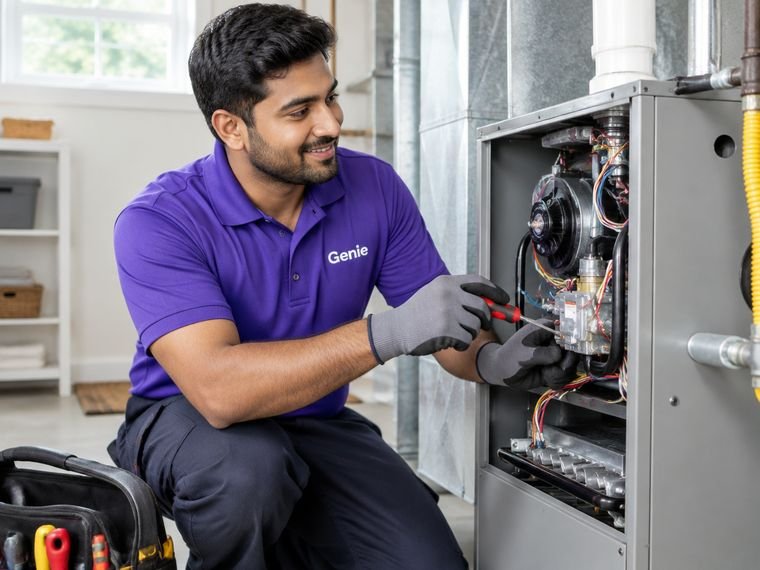
Heats air and blows it through ducts — the common standard, usually gas, sharing ducts with central AC.
| Pros | Cons |
|---|
- Fast, strong heat
- Shares ducts with AC
- Widely serviced
|
- Can feel drier
- Duct losses
- Needs filter upkeep
|
Best for: Homes with ducts in cold climates
2. Heat pump (air-source)
Moves heat instead of burning fuel — heats and cools efficiently, with cold-climate models for harsh winters.
| Pros | Cons |
|---|
- Very efficient
- Heats and cools
- May qualify for rebates
|
- Higher upfront cost
- Older models struggle in extreme cold
|
Best for: Efficiency-focused homes, mild to cold climates
3. Boiler (radiators / radiant floor)
Heats water and circulates it through radiators or in-floor tubing for even, quiet warmth.
| Pros | Cons |
|---|
- Even, comfortable heat
- Quiet
- No blowing dust
|
- Slower to adjust
- No cooling
- Higher install cost
|
Best for: Comfort-first homes, radiant-floor lovers
4. Ductless mini-split
Wall or ceiling units connected to an outdoor unit — heating and cooling with no ductwork.
| Pros | Cons |
|---|
- No ducts needed
- Room-by-room zoning
- Efficient
|
- Visible indoor units
- Upfront cost per zone
|
Best for: Homes without ducts, additions, zoning
5. Electric baseboard
Simple electric resistance heaters along the base of walls, often for supplemental or zoned heat.
| Pros | Cons |
|---|
- Low upfront cost
- Simple
- Easy zoning
|
- Higher running cost
- Slower, less even
|
Best for: Supplemental heat, small spaces, additions
Book hvac & appliances on Genie
Found the type you want? Book a vetted, insured pro at an upfront price:
FAQ
Are heat pumps good in cold climates?
Modern cold-climate heat pumps perform well even in harsh winters and are very efficient. In the coldest areas, some homes pair one with a backup for extreme cold.
What's the most efficient home heating system?
A heat pump is typically the most efficient because it moves heat rather than generating it, and it provides cooling too.
Which heating system is best if I don't have ducts?
Ductless mini-splits or a boiler system avoid the cost of adding ductwork while still heating (and, for mini-splits, cooling) effectively.
Related guides
HVAC & appliance guide: maintenance, repair-vs-replace, and lower energy bills
How to maintain your furnace, AC and major appliances, when to repair versus replace, the maintenance that cuts energy bills, and the warning signs that mean book a pro now.When to replace (not repair) your furnace, AC and water heater
How to know when to replace rather than repair your furnace, air conditioner or water heater — typical lifespans, the repair-cost rule, efficiency math, and warning signs.Furnace not working? No-heat troubleshooting before you call a pro
A no-heat troubleshooting guide — the quick checks to try when your furnace stops working, what's safe to do yourself, warning signs of a dangerous problem, and when to call an HVAC pro.How your furnace works: a simple guide for homeowners
A plain-language guide to how a furnace works — the heating cycle, key components, the role of the filter and thermostat, common problems, and how maintenance keeps it running.