Home › Guides › HVAC & appliances › HVAC & appliance guide: maintenance, repair-vs-replace, and lower energy bills
GuideHeating, cooling and major appliances are the systems you only think about when they break — usually at the worst possible moment. A little planned maintenance keeps them running efficiently, catches failures before they strand you, and tells you when it's smarter to replace than to keep repairing. Here's how to stay ahead of all of it.
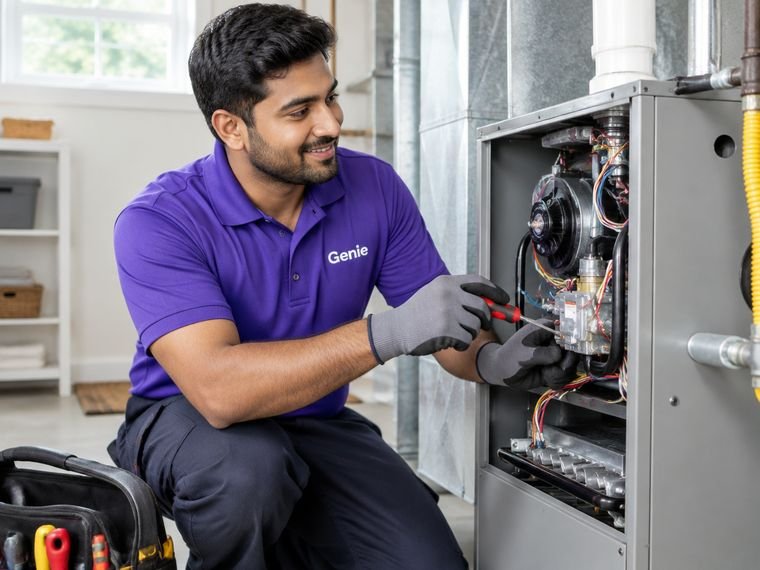
Service your furnace once a year in early fall and your AC in spring, before each peak season. A tune-up cleans and inspects the system, replaces the filter, and verifies it's running safely and efficiently. This single habit lowers energy bills, extends equipment life, keeps manufacturer warranties valid, and routinely catches a cheap part before it becomes an expensive emergency.
A useful rule: if a repair costs more than about half the price of a new unit and the system is near the end of its expected life (roughly 15–20 years for a furnace, 10–15 for AC, 8–12 for a water heater), replacement is usually the smarter money. Also weigh efficiency — an old system can cost so much to run that a new one pays back the difference in energy savings.
Beyond tune-ups: change filters on schedule (a clogged filter makes the system work harder), seal duct leaks, clean the AC condenser, use a programmable or smart thermostat, and keep vents unblocked. Duct and vent cleaning improves airflow and air quality. These small moves compound into meaningfully lower heating and cooling bills across a year.
For heating and cooling: short-cycling, weak or uneven output, rising bills, strange smells or noises, or a yellow (not blue) furnace flame. For appliances: leaks, failure to heat or cool, tripping breakers, or unusual noise. Some of these — especially a yellow furnace flame or any gas smell — are safety issues, not just efficiency ones.
A cracked furnace heat exchanger can leak carbon monoxide, which is odourless and dangerous. Test your CO and smoke detectors every fall when you book the furnace tune-up. It's the cheapest life-safety check you'll do all year, and it pairs naturally with heating maintenance.
New appliance installs (dishwashers, ranges, washers) and repairs are best handled by a pro who confirms connections, levels and safety before leaving. On Genie, HVAC and appliance work goes to licensed, insured technicians at an upfront or quoted price, with payment held until the job's confirmed and the option to be reminded every fall so you never skip the tune-up.
Every task in this guide is something you can book on Genie — vetted, insured pros at an upfront price:
Once a year each — furnace in early fall, AC in spring, before peak demand. It lowers bills, extends equipment life and catches problems before they strand you.
When a repair costs more than roughly half a new unit and the system is near end of life (about 15–20 years for a furnace), replacement is usually smarter — especially if a new, efficient unit cuts your energy bills.
A cracked heat exchanger can leak odourless carbon monoxide. Testing CO and smoke detectors every fall alongside the furnace tune-up is a cheap, essential safety check.