Home › Guides › HVAC & appliances › How your furnace works: a simple guide for homeowners
GuideYour furnace is one of the hardest-working systems in your home, yet most people have no idea how it actually heats the house — until it stops. Understanding the basics helps you spot problems early, troubleshoot simple issues, and know why maintenance matters. Here's how a furnace works, explained simply.
When the thermostat calls for heat, the furnace ignites its burners (gas) or energizes elements (electric), heating a component called the heat exchanger. The blower fan then pushes air across the hot heat exchanger and through your ducts to warm the rooms, while cold air returns to be reheated. When the set temperature is reached, the thermostat shuts it off. That cycle repeats all winter.
The main parts: the thermostat (the brain that calls for heat), the burners or elements (make the heat), the heat exchanger (transfers heat to the air while keeping combustion gases separate), the blower motor and fan (move the air), and the filter (cleans the air and protects the system). A problem in any one shows up as a heating issue.
The air filter is the cheapest, most important furnace maintenance there is. A clogged filter restricts airflow, making the furnace work harder, run less efficiently, and potentially overheat and shut down as a safety measure. Changing it on schedule (every 1–3 months depending on type) prevents a surprising number of furnace problems and lowers your heating bills.
The heat exchanger keeps the combustion gases (including carbon monoxide) separate from the air you breathe. If it cracks, it can leak CO into your home — which is why CO detectors and annual inspections matter, and why a cracked heat exchanger is a serious safety issue, not just an efficiency one. This is a core reason professional maintenance is worth it.
Typical issues: a dirty filter causing overheating shutoffs, thermostat problems, ignition or pilot failures, a failing blower motor, or worn parts. Some you can address (filter, thermostat batteries); others need a technician. Short-cycling, weak heat, strange noises, a yellow flame or rising bills all signal it's time for a look.
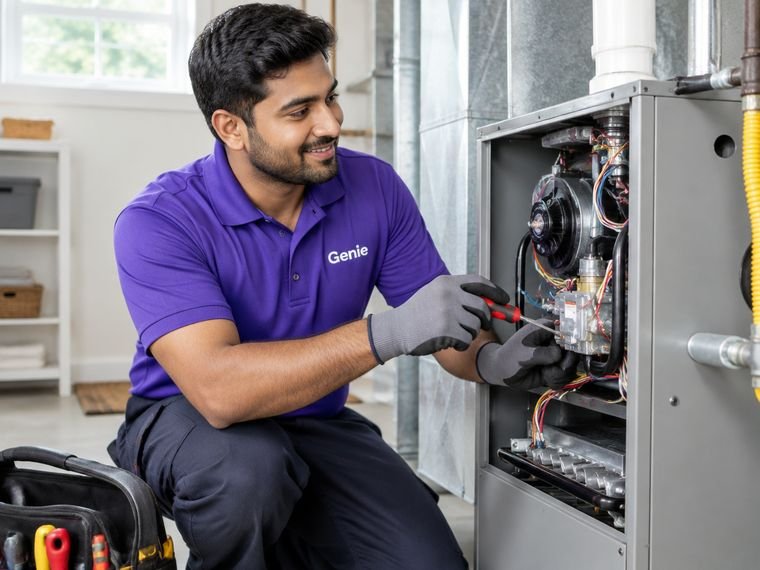
An annual tune-up cleans and inspects the burners and heat exchanger, tests ignition and safety controls, replaces the filter, and confirms safe, efficient operation. It lowers bills, extends the furnace's life, keeps the warranty valid, and — importantly — catches safety issues like a failing heat exchanger. On Genie, a licensed HVAC pro handles it at an upfront price, and can remind you every fall.
Every task in this guide is something you can book on Genie — vetted, insured pros at an upfront price:
When the thermostat calls for heat, the burners or elements heat a heat exchanger, and a blower fan pushes air across it and through your ducts to warm the rooms. Cold air returns to be reheated until the set temperature is reached.
A clogged filter restricts airflow, making the furnace work harder, run inefficiently, and potentially overheat and shut down. Changing it every 1–3 months prevents many problems and lowers heating bills.
The heat exchanger keeps combustion gases — including carbon monoxide — separate from the air you breathe. A crack can leak CO into your home, which is why CO detectors, annual inspections and prompt replacement matter.