Home › Guides › Plumbing › How your home's plumbing works: a homeowner's guide
GuideYou don't need to be a plumber, but understanding how your home's plumbing works makes you a far better homeowner — you'll know what's normal, what's a warning sign, where to shut things off in an emergency, and when a problem is DIY versus pro. Here's the whole system explained simply.
Home plumbing is really two separate systems. The supply system brings pressurized fresh water in — cold water to fixtures, and a branch through the water heater for hot. The drainage system (DWV: drain-waste-vent) carries used water and waste out by gravity. Supply is under pressure; drainage relies on slope and vents. Most problems are in one system or the other, and knowing which helps you understand what's wrong.
The most important thing to know is where your shut-offs are. The main shut-off valve stops all water to the home (crucial in a burst-pipe emergency), and individual fixtures (toilets, sinks) have their own local shut-offs so you can isolate one without cutting the whole house. Find and test these before an emergency — in a flood, seconds matter.
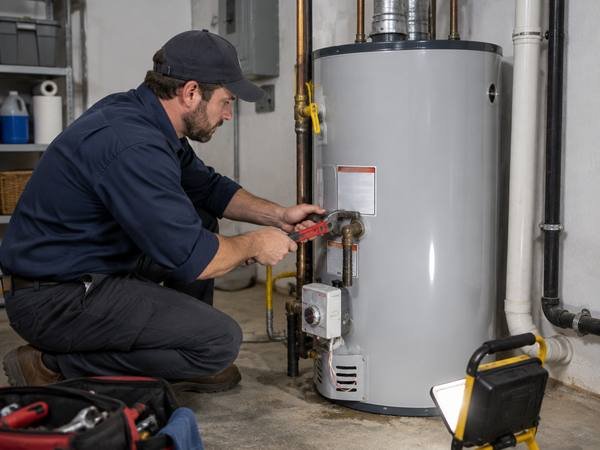
Your water heater (tank or tankless) heats incoming cold water for taps, showers and appliances. Tank models store and keep hot water ready; tankless heat on demand. They need maintenance — flushing a tank annually clears sediment that reduces efficiency and shortens its life. A leaking tank is a replace, not a repair, and worth catching before it floods.
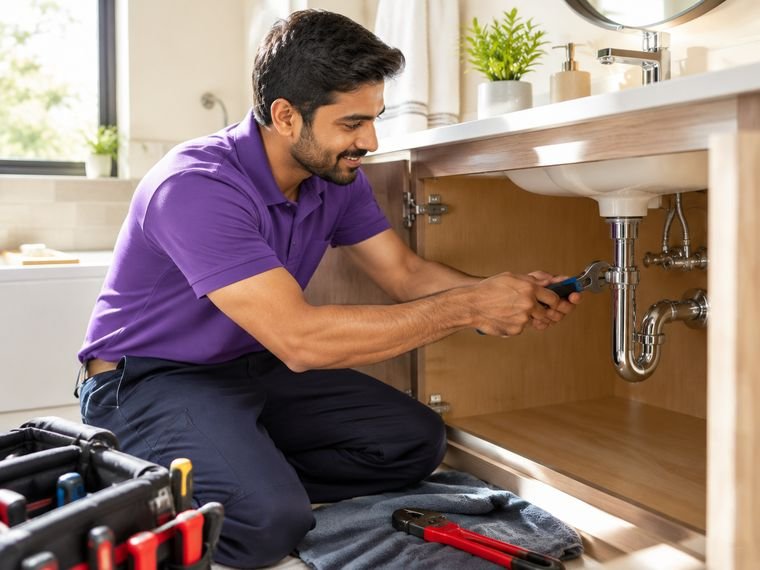
Every drain has a curved trap (the U-shaped pipe under a sink) that holds water to block sewer gases from entering your home — that's why a dry, unused drain can smell. Vents (pipes running up through your roof) let air into the drainage system so water flows smoothly. When multiple drains are slow or gurgling, it often points to a venting or main-line issue, not a simple clog.
Your home runs on a certain water pressure; too low makes showers weak, too high stresses pipes and fixtures. Low pressure at one fixture is often a clogged aerator; low pressure everywhere can be a supply or pressure-regulator issue. Understanding this helps you tell a quick DIY fix from something that needs a plumber to investigate.
Simple things — a clogged aerator, a worn toilet flapper, a plunged clog, a known shut-off — are fair game. Anything behind walls, the water heater, main-line clogs, persistent leaks, low pressure throughout, or sewer smells should go to a licensed plumber. On Genie, plumbing is handled by licensed, insured pros at an upfront or quoted price, protected until it's done.
Every task in this guide is something you can book on Genie — vetted, insured pros at an upfront price:
The supply system, which brings pressurized fresh water in (including through the water heater for hot water), and the drainage system (drain-waste-vent), which carries waste out by gravity using slope and vents.
Gurgling across fixtures often points to a venting or main-line issue, and a smell usually means a trap has dried out (its water seal blocks sewer gas) or there's a drainage problem. Persistent issues need a plumber.
Where your main and fixture shut-off valves are (crucial in an emergency), how to flush your water heater, and the difference between a simple DIY fix and a job for a licensed plumber.