Home › Guides › Plumbing › Home plumbing guide: common problems, what to DIY, and when to call a pro
GuidePlumbing problems have a way of going from annoying to expensive fast — a slow drip becomes a damaged ceiling, a minor clog becomes a backed-up line. Knowing which issues you can handle, which need a pro, and which are genuine emergencies is one of the most valuable things a homeowner can learn. Here's a clear, honest guide.
The usual suspects are running or leaking toilets, dripping faucets, slow or clogged drains, low water pressure, water heater issues, and leaks under sinks. Most are gradual — which is exactly why they get ignored until they're worse. A running toilet alone can waste thousands of litres a month, and a hidden under-sink leak can quietly rot a cabinet and subfloor.
A handful of fixes are genuinely homeowner-friendly: plunging a simple clog, replacing a worn toilet flapper, cleaning an aerator to restore faucet pressure, tightening a visible connection, and swapping a shower head. These need basic tools and no special skill. The rule: if it doesn't involve opening up permanent pipework, gas, or the main supply, it's usually fair game.
Anything behind the wall or under the slab, water heater replacement, main-line clogs, repiping, gas water heaters, sewage backups, and any leak you can't see the source of should go to a licensed plumber. These carry real risk of water damage, contamination or code issues — and in many areas permanent plumbing work legally requires a licensed trade.
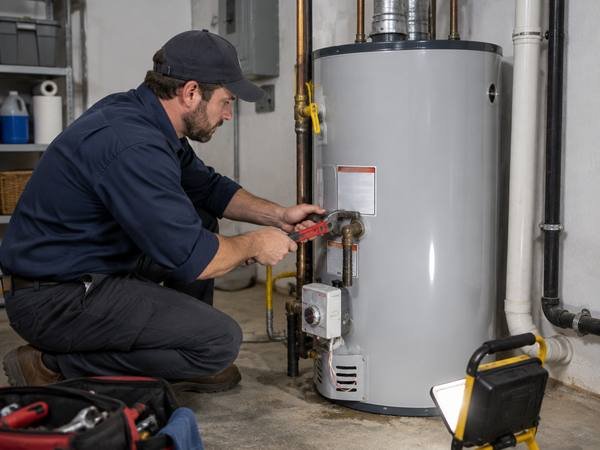
Book a pro promptly for: water stains on ceilings or walls, a spike in your water bill with no explanation, multiple slow drains at once (a sign of a main-line issue), sewage smells, no hot water, or any visible active leak. Several slow drains together, in particular, often mean the problem is in the main line, not the fixture — and that only gets worse.
For a burst pipe or major leak, shut off the water first — know where your main shut-off valve is before you ever need it. Shut off the water heater if it's involved. Then get a licensed pro out quickly, because water damage compounds by the hour. Clearing standing water and moving valuables limits the secondary damage while you wait.
Most big plumbing bills are preventable. Don't pour grease down drains, use drain screens, address slow drains early, insulate exposed pipes before winter, flush your water heater annually, and know your shut-off valves. A yearly check of visible connections and the water heater catches small problems while they're still small.
Plumbing quotes vary widely because scope and access vary. The fix is an itemized quote — the issue, parts, labour and any access work broken out — so you can compare like-for-like. On Genie plumbing is handled by licensed, insured pros, the work is captured in a quote or upfront price, and payment is protected until the job's confirmed done.
Every task in this guide is something you can book on Genie — vetted, insured pros at an upfront price:
Simple fixes like plunging a clog, replacing a toilet flapper, cleaning an aerator or swapping a shower head are fine. Permanent pipework, gas, water heaters and main-line issues need a licensed plumber.
Multiple slow drains usually point to a problem in the main line rather than a single fixture. It won't fix itself — book a licensed plumber before it becomes a backup.
Shut off the water at the main valve (know where it is in advance), shut off the water heater if involved, then get a licensed pro out fast. Water damage compounds quickly.