Home › Guides › Energy & EV › EV charger & home energy guide: installation, costs and going electric at home
GuideGoing electric at home — an EV charger, maybe solar and a battery — is one of the best upgrades you can make, but it's also one where doing it right matters most. These are licensed-electrician jobs with real capacity, permit and safety considerations. Here's a clear guide to charging and home energy, and what installation actually involves.
Level 1 charging uses a standard outlet and is slow — fine for low-mileage drivers but often not enough. Level 2 is the home standard: far faster, on a dedicated 240V circuit, adding a usable range overnight. Most homeowners installing a charger want Level 2, which needs a licensed electrician and often a permit.
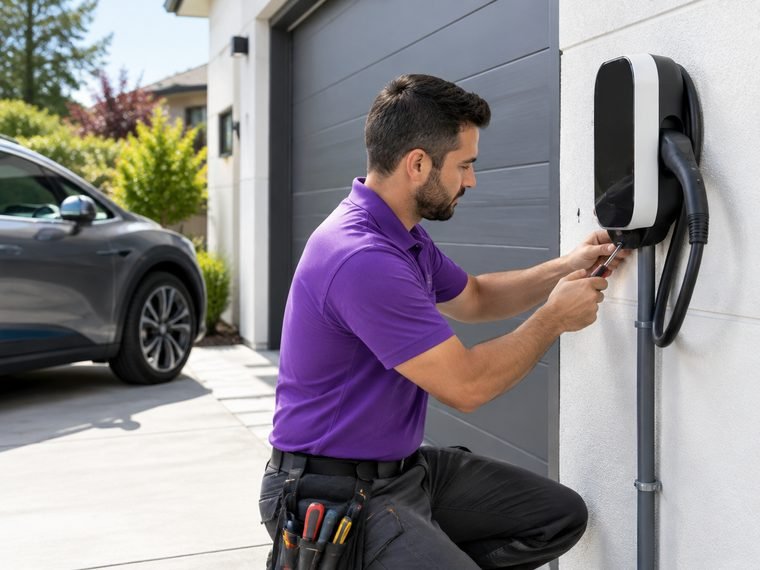
A proper EV charger install isn't just mounting a unit — it's running a dedicated circuit from your panel, verifying your panel has the capacity, placing the charger for convenient cable reach, and pulling the permit and inspection. The electrician assesses whether your existing service can handle the new load before anything is installed.
Older or smaller electrical panels may not have room for a high-draw EV charger without upgrades. This is the single most common surprise in EV installs. A licensed electrician does a load calculation up front, so you know whether it's a straightforward install or whether the panel needs attention first — before you're committed.
Solar panels and home battery storage take home energy further — lower bills, backup power, and resilience. These are bigger projects with their own siting, capacity, permit and interconnection considerations, and they pair well with EV charging. Like chargers, they're licensed work where correct design and installation determine whether they pay off.
EV chargers and energy installs commonly require permits and inspection, which is your assurance the work is safe and to code. Incentives and rebates for EV charging and home energy change over time and by region — worth checking what's currently available where you live before you install, as they can meaningfully offset the cost.
Because this is high-load electrical work, use a licensed, insured electrician — not a handyman. On Genie, EV charger and home energy installs route to licensed electricians who handle the load assessment, permit and inspection, with scope and price captured before work starts and payment held until the job's confirmed.
Every task in this guide is something you can book on Genie — vetted, insured pros at an upfront price:
Most homeowners want Level 2 — it's far faster than a standard outlet, runs on a dedicated 240V circuit, and adds usable range overnight. It needs a licensed electrician and often a permit.
Not always — older or smaller panels may need upgrades. A licensed electrician does a load calculation up front so you know before committing whether it's a simple install or the panel needs attention first.
Usually yes — EV chargers and energy installs commonly require a permit and inspection, which ensures the work is safe and to code. A licensed electrician handles it as part of the job.